- Native plants reduce water use by 50-70% and require no fertilizer once established
- Smart irrigation controllers save 30-50% on water bills compared to fixed timers
- Composting yard waste returns nutrients to your soil and reduces landfill use
- Reducing lawn area is the single highest-impact sustainability change you can make
- Rain gardens capture stormwater runoff and filter pollutants naturally
Sustainable landscaping is not just good for the environment — it is also easier on your wallet, your schedule, and your back. By working with nature instead of against it, you can create a landscape that requires less water, fewer chemicals, less mowing, and less ongoing maintenance while looking more beautiful and supporting the birds, bees, and butterflies that make outdoor spaces come alive. For Massachusetts homeowners, sustainable landscaping is particularly relevant because our variable climate, water restrictions, and growing environmental awareness make it both practical and increasingly valued by homebuyers.
Water Conservation: The Biggest Impact
Water is the most expensive and environmentally significant resource consumed by residential landscapes. The average American household uses over 30,000 gallons of water per year on outdoor irrigation — a staggering number when you consider that much of it is wasted through evaporation, runoff, and overwatering. Here is how to cut that number dramatically.
Install Smart Irrigation
If you have an irrigation system with a traditional timer, upgrading to a smart controller is the highest-return water conservation investment you can make. Smart controllers like Rachio and Hunter Hydrawise connect to local weather stations and automatically adjust watering based on actual rainfall, temperature, humidity, and wind conditions. When rain is forecast, the system skips the next cycle. During a cool, humid week, it reduces run times. During a heat wave, it increases them proportionally. This dynamic adjustment typically reduces water use by 30-50% compared to a fixed-schedule timer.
Beyond the controller, evaluate your irrigation zones. Drip irrigation for garden beds delivers water directly to plant roots with 90-95% efficiency, compared to 50-70% for spray heads that lose water to evaporation and wind. Installing drip irrigation in beds and reserving spray heads only for lawn areas can reduce bed watering by 50% or more.
Choose Drought-Tolerant and Native Plants
Once established (after their first growing season), many native Massachusetts plants need little to no supplemental watering. They evolved with our rainfall patterns and are adapted to survive summer dry spells. Some excellent drought-tolerant performers for Metro West landscapes include butterfly weed (Asclepias tuberosa), coneflower (Echinacea), black-eyed Susan (Rudbeckia), lavender (Lavandula), Russian sage (Perovskia), catmint (Nepeta), sedum varieties, and ornamental grasses like switchgrass and little bluestem.
Reduce Lawn Area — The Biggest Win
Traditional turfgrass lawns are the single most water-intensive and maintenance-intensive element in most landscapes. They require weekly mowing, regular fertilizing, weed control, and consistent irrigation to look their best. Reducing your lawn area — even by 25-30% — has an outsized impact on water use, chemical use, maintenance time, and environmental footprint.
Consider replacing underused lawn areas with native garden beds that need no mowing and minimal watering once established. Convert slopes (which waste irrigation water to runoff) to groundcover plantings. Replace narrow, difficult-to-mow strips with mulch or pavers. Create a wildflower meadow in a back area — these only need mowing once per year.
Reduce Chemical Use
Integrated Pest Management (IPM)
The sustainable alternative to routine chemical application is Integrated Pest Management — a science-based approach that uses the least-toxic effective solution. IPM starts with identification: before spraying anything, determine exactly what pest or disease you are dealing with. Many "problems" homeowners spray for are actually cosmetic issues that resolve on their own or beneficial insects that are being killed by mistake.
When treatment is needed, IPM escalates from least to most intervention. Cultural controls come first — improving plant health through proper watering, mulching, and fertilization so plants can resist problems naturally. Biological controls encourage beneficial insects (ladybugs eat aphids, parasitic wasps control caterpillars, praying mantises are general predators). Mechanical controls include hand-picking pests, using row covers, or washing aphids off with a strong hose spray. Chemical controls are the last resort, and when used, are targeted (applied only to affected plants, not broadcast), specific (using products that affect only the target pest), and timed (applied when the pest is most vulnerable).
Organic Lawn Care
Transitioning to organic lawn care does not mean accepting a weedy, brown lawn. Organic programs focus on building healthy soil that grows healthy grass naturally. Key practices include top-dressing with compost annually to build soil biology and organic matter, using organic fertilizers (corn gluten meal, composted manure, bone meal) that feed the soil ecosystem rather than just the grass, overseeding with clover which fixes nitrogen from the air naturally and stays green during drought, and mowing high (3.5 inches) to encourage deep roots and natural weed suppression.
Support Local Wildlife
Your landscape can be a functioning ecosystem that supports birds, butterflies, bees, and other beneficial wildlife — or it can be a sterile green carpet that provides nothing for the natural world. The choice is yours, and the difference comes down to plant selection.
The Power of Native Plants
Native plants are the foundation of local food webs. Research by Dr. Doug Tallamy at the University of Delaware has shown that native oak trees support over 500 species of caterpillars (which feed baby birds), while non-native ornamental trees like Bradford pear support virtually zero. Native plants provide nectar and pollen for bees and butterflies, berries and seeds for birds, and host plants for caterpillar species that are essential food for nesting birds.
Create Habitat Features
Beyond plant selection, simple habitat additions make your landscape more wildlife-friendly. Leave some leaf litter in garden beds — it provides overwintering habitat for beneficial insects, salamanders, and ground-nesting bees. Include a simple water feature (even a shallow birdbath) for drinking and bathing. Leave dead wood (a standing dead tree, a log pile) for cavity-nesting birds and beneficial insects. Plant in layers — trees, understory trees, shrubs, perennials, groundcovers — creating the diverse vertical structure that wildlife needs.
Reduce Waste Through Composting
Compost Your Yard Waste
Every leaf, grass clipping, and pruning from your landscape is a resource, not waste. Home composting converts these materials into rich, dark compost that improves soil structure, adds nutrients, supports beneficial microorganisms, and reduces the need for purchased amendments. A simple compost bin can process kitchen scraps (vegetable and fruit waste, coffee grounds, eggshells), fallen leaves, grass clippings, and small pruning debris into finished compost in 3-6 months.
Smart Mulching
Organic mulch is sustainability in action. A 2-3 inch layer of shredded bark or leaf mulch suppresses weeds without herbicides, retains soil moisture reducing irrigation needs, moderates soil temperature, and breaks down over time to feed the soil with organic matter. Keep mulch 3 inches away from tree trunks to prevent moisture rot. Replenish annually as it decomposes.
Sustainable Hardscaping
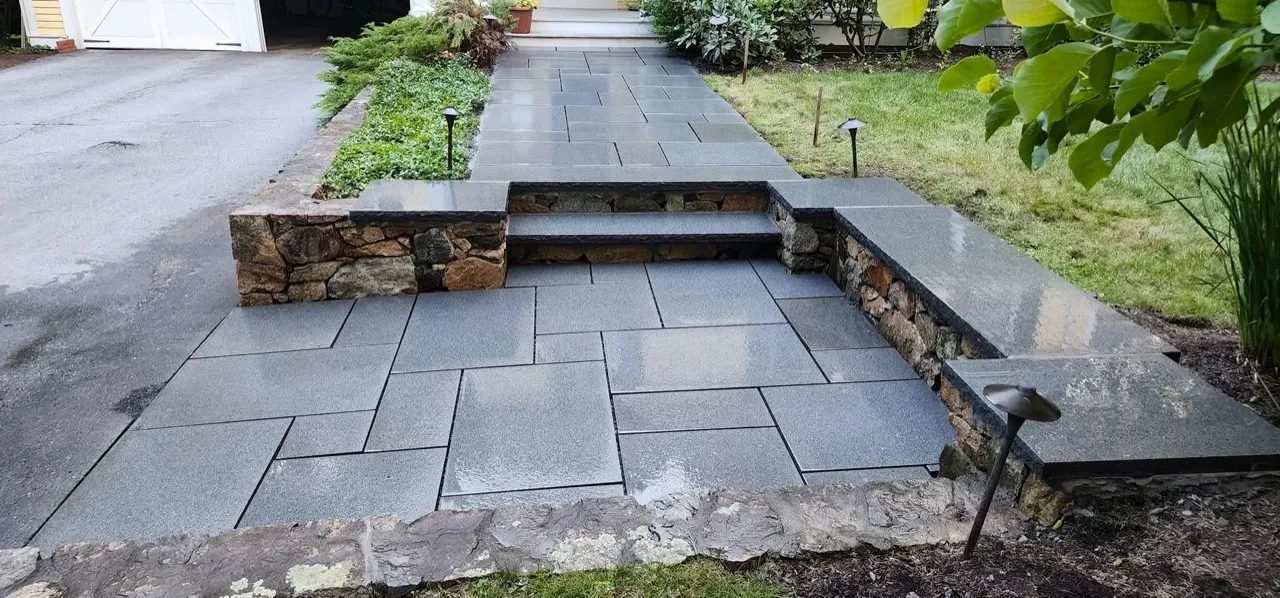
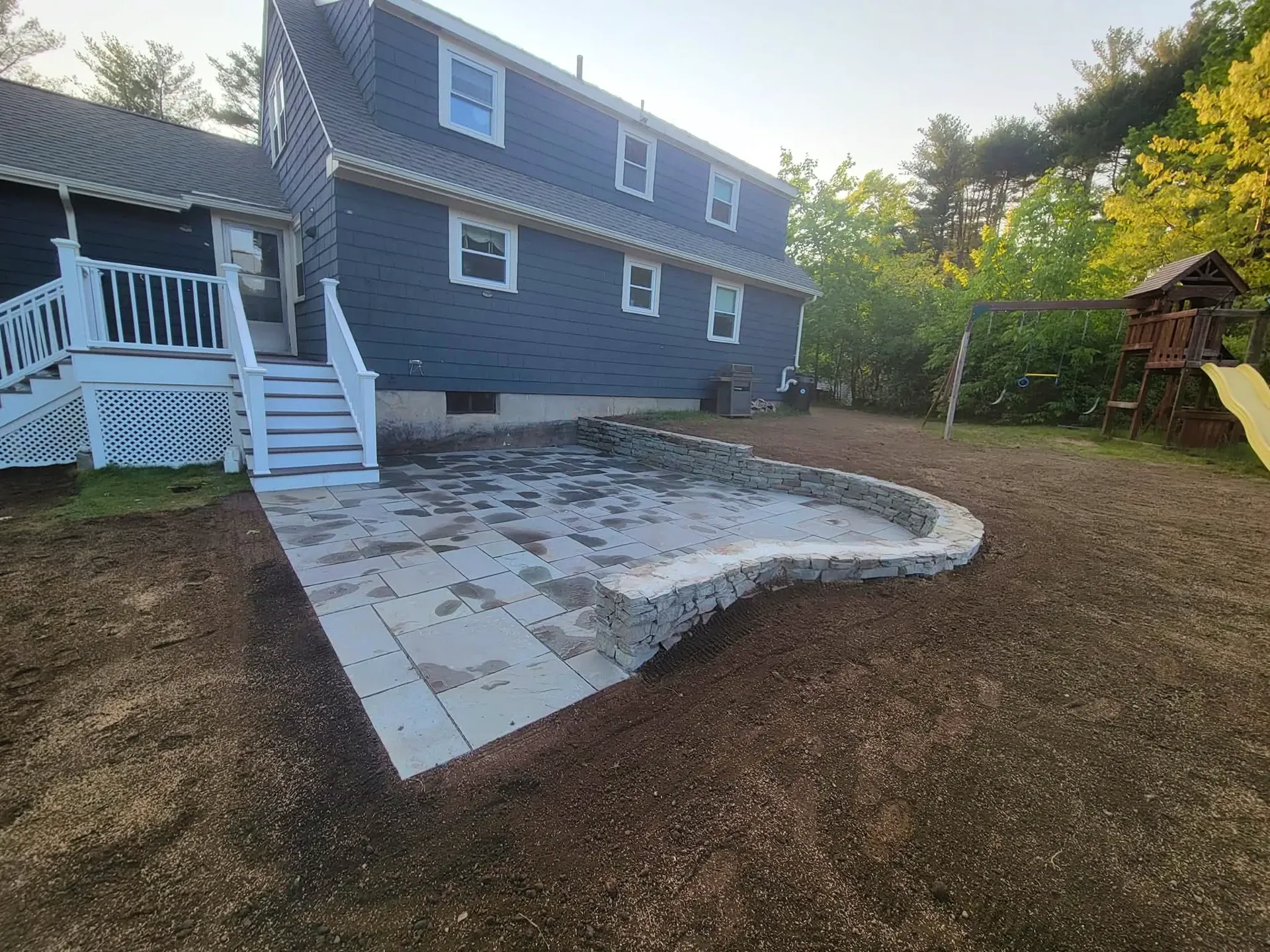
Traditional concrete and asphalt surfaces are impermeable — every drop of rain that falls on them runs off, carrying pollutants into storm drains and waterways while contributing nothing to groundwater recharge. Permeable hardscaping alternatives allow water to infiltrate the soil below.
Permeable pavers are interlocking units with slightly wider joints that allow water through. Gravel with stabilizer grids creates a firm walking surface while remaining fully permeable. Decomposed granite provides a natural, attractive surface for pathways. Stepping stones set in groundcover combine access with permeability. Rain gardens — depressed planting beds designed to capture runoff from roofs and driveways — filter stormwater naturally through plant roots and soil biology before it reaches waterways.
Ready to make your landscape more sustainable? Monges Landscaping offers eco-friendly services including native plant design, smart irrigation systems, rain garden installation, and organic lawn care throughout Boston, Cambridge, Newton, and Metro West.
Getting Started
You do not have to overhaul your entire landscape at once. Start with one or two changes — install a smart controller, replace one garden bed with native plants, or begin composting — and build from there. Every step toward sustainability reduces your costs, your effort, and your environmental impact while creating a more beautiful, living landscape. Contact us for a sustainable landscaping consultation!