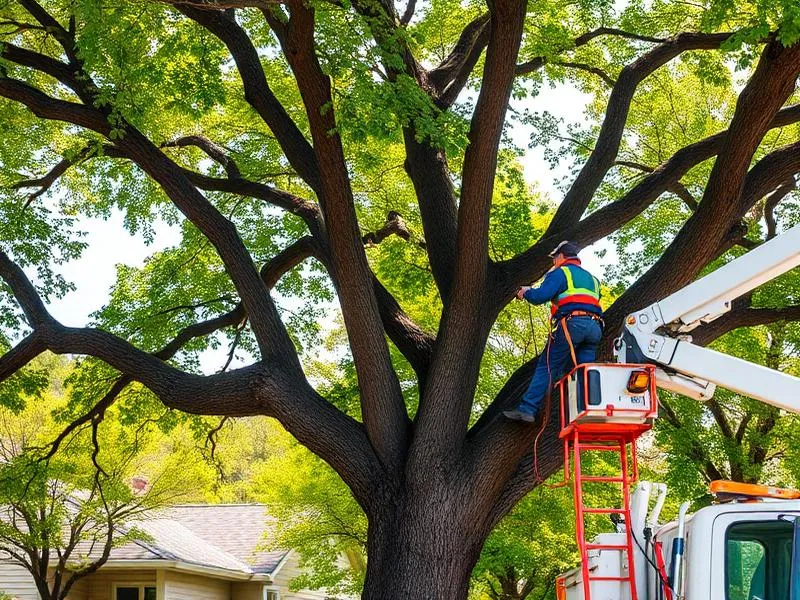
- Late winter (February-March) is the best time to prune most deciduous trees in Massachusetts
- Spring-flowering trees should be pruned immediately after they finish blooming
- Never prune oaks from April through July due to oak wilt risk
- Dead or hazardous branches can and should be removed any time of year
- Avoid all pruning in fall — trees cannot heal wounds effectively before winter
Proper pruning timing is crucial for tree health, and getting it wrong can have consequences that last years or even kill a tree outright. Prune an oak in May and you risk introducing oak wilt, a lethal fungal disease. Prune a lilac in late summer and you will remove next spring's flower buds. Prune any tree in fall and you create wounds that cannot heal before winter, inviting decay and cold damage. This comprehensive guide covers exactly when to prune every type of tree common in Boston, Metro West, and the Greater Massachusetts area — and just as importantly, when not to.
Why Pruning Timing Matters
Trees are not passive organisms — they actively respond to pruning wounds by producing callus tissue that seals over the cut, compartmentalizing the damage to prevent decay from spreading into healthy wood. This healing process requires energy and active growth, which is why timing matters so much. A tree that is dormant (winter), actively growing (spring/summer), or shutting down for winter (fall) responds very differently to the same pruning cut.
During active growth, trees produce abundant callus tissue and can seal wounds relatively quickly. During dormancy, the wound sits open but disease pressure is low because insect vectors and fungal spores are also dormant. During fall, wounds cannot heal before winter, and the tree may redirect energy away from winter hardening to try to seal the wound — weakening it heading into cold weather.
Deciduous Trees: The Complete Pruning Calendar
Late Winter (February-March) — The Universal Best Time
For the majority of deciduous trees in Massachusetts, late winter — after the coldest weather has passed but before buds begin to swell — is the optimal pruning window. In the Greater Boston area, this typically falls between mid-February and late March. Here is why this timing works so well.
Trees are fully dormant, so pruning causes minimal stress. The bare canopy allows your arborist (or you) to see the entire branch structure clearly, making it easier to identify crossing branches, dead wood, poor branch angles, and structural problems. Disease-carrying insects and fungal spores are inactive, dramatically reducing infection risk. And when spring growth begins just weeks later, the tree immediately begins producing callus tissue to seal wounds.
Trees to prune in late winter:
- Red and white oaks — February through March only. Oaks must not be pruned from April through July due to oak wilt risk (see warning below)
- Maples — Most maples prune well in late winter, though sugar maples "bleed" sap heavily from late winter pruning. The bleeding is not harmful but can be messy; prune after full leaf-out in June if appearance matters
- Birches — Prune in late winter; also bleed if pruned during sap flow
- Elms — Late winter only, to minimize Dutch elm disease transmission
- Honey locusts — Late winter
- Lindens — Late winter
- Most fruit trees (apple, pear, cherry) — February through early March, before buds swell
After Bloom — Spring-Flowering Trees
Trees and shrubs that bloom in spring produce their flower buds the previous fall on "old wood." If you prune these plants in late winter, you will remove all the flower buds and lose the spring show entirely. Instead, prune spring-flowering trees immediately after they finish blooming, giving the plant a full growing season to produce next year's buds on new growth.
Prune immediately after flowering:
- Magnolias — Prune right after petals drop in late April/early May
- Flowering cherries — After bloom in May
- Dogwoods — After bloom in late May/June
- Crabapples — After bloom in late May
- Redbuds — After bloom in May
- Lilacs — Immediately after bloom in late May/early June. Wait even a few weeks and you risk removing next year's buds
- Forsythia — After bloom in early April
- Azaleas and Rhododendrons — After bloom in May/June
Summer-Flowering Trees and Shrubs
Plants that bloom on "new wood" (current season's growth) can be pruned in late winter or early spring before growth begins, because they will produce flowers on whatever new branches grow after pruning.
Prune in late winter:
- Hydrangea paniculata ('Limelight', 'Quick Fire') — Late winter
- Butterfly bush — Cut back hard in late March/early April
- Rose of Sharon — Late winter
- Crape myrtle (where hardy) — Late winter
Evergreen Trees
Light Pruning: Almost Any Time
Evergreens — pines, spruces, firs, arborvitae, and hemlocks — can be lightly shaped throughout the growing season. Light pruning means removing small amounts of growth to maintain shape, not major limb removal.
Major Pruning: Late Winter to Early Spring
For significant pruning of evergreens (removing large limbs, major shaping, or size reduction), late winter to early spring — before new growth begins — is the best window.
Specific timing by species:
- Pines — The best time to control pine size and shape is late spring, when new growth "candles" are elongating but before needles expand. Snapping or cutting candles in half limits new growth while maintaining a natural appearance
- Spruces and Firs — Late winter through early spring. Avoid late summer or fall pruning
- Arborvitae — Early spring or early summer. These tolerate pruning well but do not cut back into old wood (bare branches) as they will not regrow
- Hemlocks — Tolerant of pruning almost any time, one of the most forgiving evergreens. Late winter is ideal for major work
- Yews — Extremely tolerant of heavy pruning, even into old wood. Late winter or early summer
The Fall Pruning Myth
Many homeowners are tempted to prune in fall, when leaves are dropping and the garden is being "put to bed." Resist this urge. Fall is the worst time to prune almost anything. Trees are actively moving carbohydrates from leaves to roots for winter storage — pruning disrupts this process. Warm fall days can stimulate new growth from pruning cuts that will not harden before winter, resulting in freeze damage. Fungal spores are abundant in the damp fall air and readily infect fresh wounds. The tree will carry open wounds through the entire winter without the ability to produce callus tissue to seal them.
The one exception: dead, damaged, or hazardous branches should be removed whenever they are discovered, regardless of season. Safety always takes priority over optimal pruning timing.
How Much to Prune
Regardless of timing, never remove more than 25% of a tree's living canopy in a single year. Removing too much foliage stresses the tree, reduces its ability to photosynthesize and store energy, and can trigger excessive "water sprout" growth — those straight, vertical shoots that grow rapidly from cut points but have poor structural attachment.
For young trees (under 15 years), focus pruning on structural training: establishing a single dominant leader, removing competing leaders, correcting narrow branch angles, and developing well-spaced scaffold branches. Good structural pruning while young prevents the need for major corrective pruning later.
Common Pruning Mistakes to Avoid
- Topping — Cutting all branches back to stubs. This is the most damaging pruning practice and should never be done. It destroys tree structure, triggers weak water sprout growth, and shortens lifespan dramatically
- Flush cuts — Cutting a branch flush against the trunk removes the branch collar, the swollen area at the base that contains the tree's wound-sealing mechanisms. Always cut just outside the branch collar
- Leaving stubs — Cutting too far from the trunk leaves a stub that the tree cannot seal over, creating a permanent entry point for decay
- Lion-tailing — Stripping interior branches and leaving only tufts of foliage at branch tips. This shifts weight outward, increasing breakage risk
Large trees and complex pruning require professional equipment and training. Monges Landscaping provides expert tree pruning services throughout Boston and Metro West, using ISA-approved techniques that protect your trees' health and structure.
When to Call a Professional
Any tree work involving a ladder, chainsaw, or proximity to power lines should be performed by a trained professional with proper equipment and insurance. Improper pruning by amateurs is one of the leading causes of long-term tree decline in residential landscapes. A single bad pruning job can permanently ruin a tree's structure. Monges Landscaping offers professional tree pruning services for all tree types. Contact us to schedule an assessment.